LUNA SOCCER NEWS
Reality Check: Michael Carrick's Luck Runs Dry at Manchester United
26 October 2026
· 4 min read
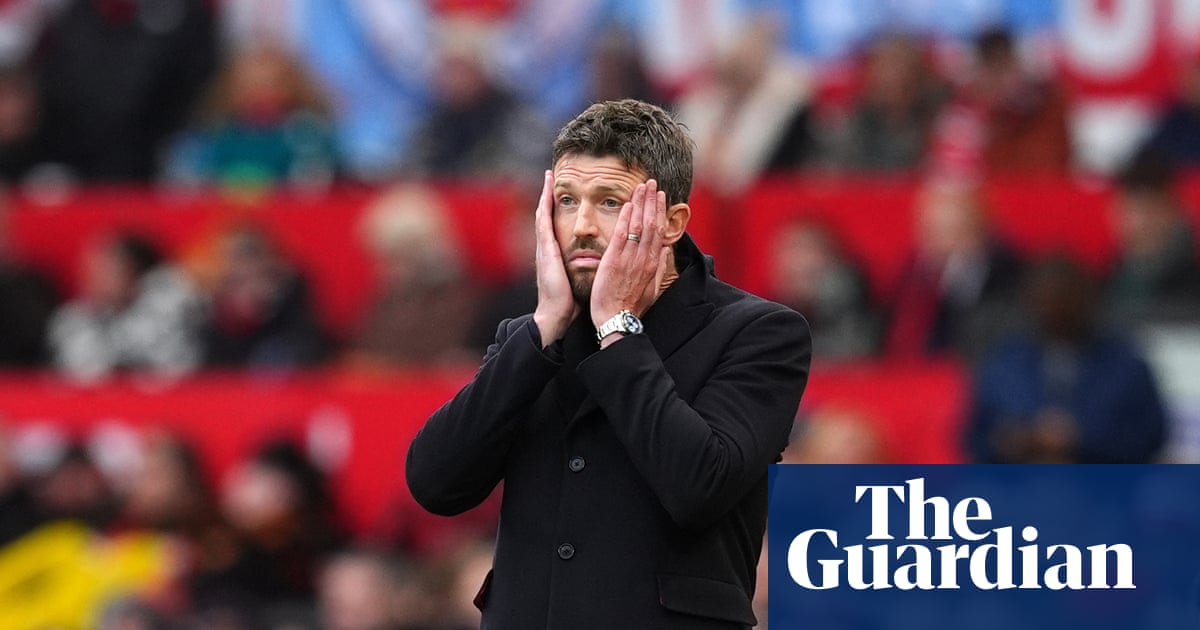
Manchester United’s impressive finish to last season can largely be attributed to favorable circumstances and a bit of good fortune.
Since Michael Carrick took the reins, United has emerged as the third-best team in the Premier League. It’s an impressive feat, especially considering only Arsenal (57 points) and Manchester City (56) have outperformed United (46) during Carrick's time as head coach.
However, those numbers tell only part of the story. While Carrick’s squad briefly topped the league during his 17-match stint last season, their current position—sitting 16th with no wins in eight matches across all competitions—is alarming. Narrow losses to City might be acceptable, but three-goal defeats to Como and Bournemouth could signal the end of Carrick's tenure.
There’s an argument to be made for a bit of bad luck this season. Late equalisers conceded against Everton and Tottenham were costly, and they only managed a draw against a winless Fulham thanks to a last-minute goal. According to Opta’s expected points model, United has underperformed by 3.8 points this season, placing them among the clubs most adrift of where they should be.
With an expected position of 10th, the club's performance is hardly what you'd expect from a team that spent heavily in the summer transfer market—second only to Real Madrid in net spend. Despite their illustrious history and significant revenue, the current results are far from inspiring.
If they’ve faced a few unfortunate outcomes, the downturn was also somewhat predictable. Last season, United outperformed their expected points by an impressive 12.7, a feat unmatched by any other club. Such good fortune couldn’t last forever, especially given the poor recruitment strategies over the summer that heightened the risk of a decline.
The unsustainability of their previous results is evident. Eight of United’s 12 league wins under Carrick last season came by a single goal, a statistic only bettered by Napoli in Europe’s top leagues. In five of those eight victories, the expected goal margin was razor-thin, and they lost the xG battle in draws against West Ham and Sunderland. They had their fair share of luck.
But it’s not just about luck turning against them; United has struggled to break down teams when they dominate possession. This has been a persistent issue, one that plagued Ole Gunnar Solskjær and now seems to be hindering Carrick too. The cycle continues for this overpromoted club legend.
In Carrick’s debut match, United triumphed in a Manchester derby while possessing just 32% of the ball. Similarly, they managed wins against Liverpool (38%), Chelsea (40%), and Arsenal (43%) with minimal possession. Yet this season, they’ve failed to score against Hull and Bournemouth, despite controlling 72% and 63% of the ball respectively. Even with a man advantage against City, they couldn’t find the net, managing only 55% possession.
While United leads the league in shots, a significant portion comes from outside the penalty area, which explains why their non-penalty expected goals per shot average is among the worst in the Premier League.
This raises valid questions about Carrick’s tactical approach. After the loss to Como, Bruno Fernandes echoed some frustration, prompting Carrick to respond, "Whatever system you play, if you don’t run, you ain’t going to win." His concern about the team's physicality is supported by the data.
It’s crucial to note that there’s little correlation between distance covered and success. For instance, Arsenal tops the league in distance run per match (119.4 km), while Fulham closely follows at 119.0 km. United, on the other hand, sits near the bottom, averaging 112.3 km, though it’s an improvement over the 102.2 km they managed last season.
What’s more alarming is the decline in sprinting. Data indicates that United’s outfield players are averaging fewer sprints per 90 minutes compared to last season. Notably, Youri Tielemans is underperforming relative to his previous levels at Aston Villa, and is barely registering as much as Casemiro, despite being five years younger.
The rise in possession—from 49.1% last season to 56.7% this season—might explain the reduced sprints, but teams like City and Arsenal, who excel in possession, manage to sprint even more. It seems unlikely that this drop-off in intensity is entirely intentional.
So, have the players stopped putting in the effort for Carrick? Or are they simply feeling the strain of a packed schedule after the Champions League qualification he initially secured? Whatever the reason, one thing is clear: the intensity has dipped. The fortunate circumstances of the previous season have vanished, and Carrick appears to be struggling to steer the team through a much tougher campaign.