LUNA SOCCER NEWS
Shirt Numbers: From Tradition to Trend in the Premier League
11 November 2026
· 4 min read
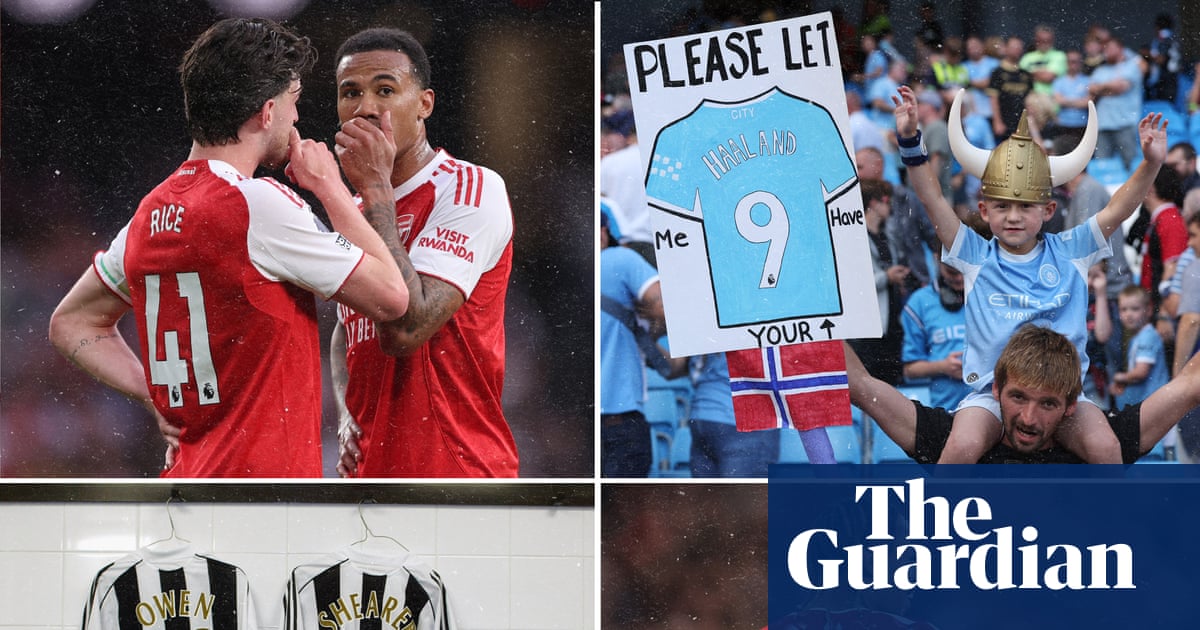
In the world of football, the significance of shirt numbers is shifting. While classic No 9s continue to rattle the net and No 1s guard the goal, the landscape has changed dramatically since squad numbers were introduced in the early '90s.
So, what’s the price tag on a shirt number? Arsenal charges £8 for two digits on their 2026-27 home shirt, while Manchester City asks for £16 for customizations. That’s a steal compared to the wild world of baseball, where Juan Soto forked out $92,000 for the coveted No 22 from Brett Baty when he joined the Mets. But hey, baseball allows players to don a '0', so anything can happen!
In football, the options are vast, even if no one has dared to wear zero. According to Transfermarkt, every number from 1 to 99 has seen action in the Premier League, with only a few numbers above 45 left unused. It’s a curious mix, with teams like Brentford and Manchester City managing to issue a No 99 while never having a No 46 in their ranks.
Chelsea stands out for not having a player wear a number higher than 81, despite their busy transfer windows. Meanwhile, Everton is currently fielding its second No 10 for the 2026-27 season, even though they lack a No 7 or No 9. Quite the head-scratcher, isn’t it, Toffees fans?
The concept of fixed squad numbers is a recent development in football's long history. Originally, numbered shirts debuted in 1911, with the first 11 players typically donning Nos 1 to 11 until the 1990s. Iconic players have always had an affinity for key numbers; just look at Kenny Dalglish and his revered No 7 at Liverpool. Today, those numbers often define a player's brand more than their club affiliation.
Opta keeps track of Premier League goals linked to shirt numbers since the 1993 introduction of squad numbers. The top scorers mostly wear numbers between 7 and 11, proving that traditional numbers still hold significant weight. However, the rankings beyond that are less predictable. Thierry Henry may have elevated the value of No 14, but it's hard to name many players who have contributed to the over 1,100 goals scored by those in the 17-20 range.
Goals aren't the sole measure of a player's worth. Transfermarkt uses various factors to estimate a player's market value, providing a broad perspective rather than a definitive price tag. With this info, we can dissect which shirt numbers hold the most value in the current Premier League.
Interestingly, there’s no clear pattern among the most valuable players. The 13 athletes estimated to be worth at least €100 million sport 10 different numbers, with No 11 surprisingly absent from the list—quite a change from Mohamed Salah’s heyday.
Remarkably, only one No 9 makes it into the top eight, but Erling Haaland stands tall as the Premier League’s most valuable player. While João Pedro also claims a spot in the €100 million club, No 10 leads with a total market value of €766 million, followed by No 9 at €752 million and No 7 at €683.5 million. Yet, none of these numbers boasts the highest average, which suggests that quality trumps quantity in this game.
If you’re not a supporter of Chelsea, Manchester United, or Newcastle, you might struggle to recall who wears the No 41 shirt. Even fans might find it a challenge! But with Arsenal's Declan Rice leading the charge alongside Estêvão, Harry Amass, and Jacob Ramsey, No 41 now boasts the highest average market value in the Premier League.
This picture would have looked quite different a few seasons ago, with more traditional numbers likely in the top 10. Back in 2018 and 2019, players like N’Golo Kanté and Raheem Sterling were valued over €100 million while wearing No 7, while Eden Hazard, Harry Kane, and Sadio Mané commanded high prices in No 10. But today, it’s No 41 that shines brightest, thanks in large part to the impact of Declan Rice.